


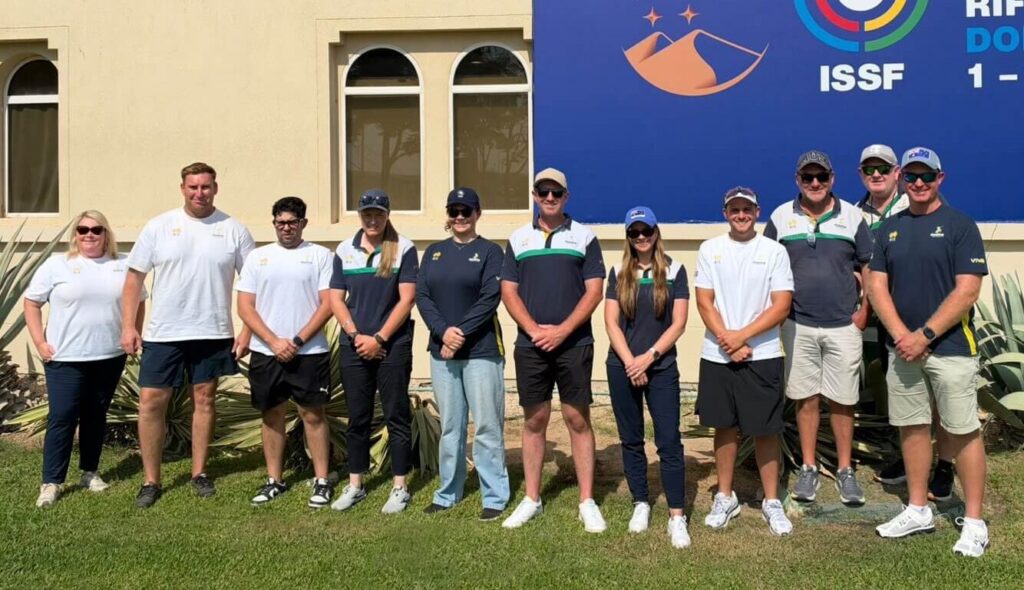
Last Friday, Australia’s athletes concluded their competition at the 2026 ISSF World Championships in Doha, Qatar, bringing two weeks of world-class international shooting to a close.
Held from 1-14 November at the Lusail Shooting Club, this year’s competition brought together 1,041 athletes from 91 countries, across 1,928 registered starts in 23 medal events.
Building on the intensity of a World Championships, the stakes were even higher this year, with the competition marking the commencement of the LA 2028 Olympic qualification period. Athletes had their first opportunity to secure quota places for their respective National Olympic Committees, adding another significant dimension to an already highly competitive event.
The first week of shotgun competition saw Aussies, Luke Argiro and Matthew Everingham take on the Men’s Skeet competition. For Matthew Everingham this marked his World Championship career debut, whilst for Luke Argiro this was his second World Championships, but his first back after a six-year hiatus from international competition. In a highly competitive international field, Argiro finished 65th with a score of 116, whilst Everingham placed 76th with a score of 114.
In the second week of the shotgun competition, attention turned to the Trap events as Australia fielded a strong contingent of 6 trap athletes, including three athletes in both the Men’s and Women’s Trap events.
Despite challenging conditions throughout the Qualification rounds, Penny Smith led the Australian contingent in the Women’s Trap event, finishing 11th overall with a score of 114 out of 125, just two targets short of a potential final. Fellow Australians, Catherine Skinner and Laetisha Scanlan finished 25th and 26th respectively, each recording scores of 110 out of 125 targets.
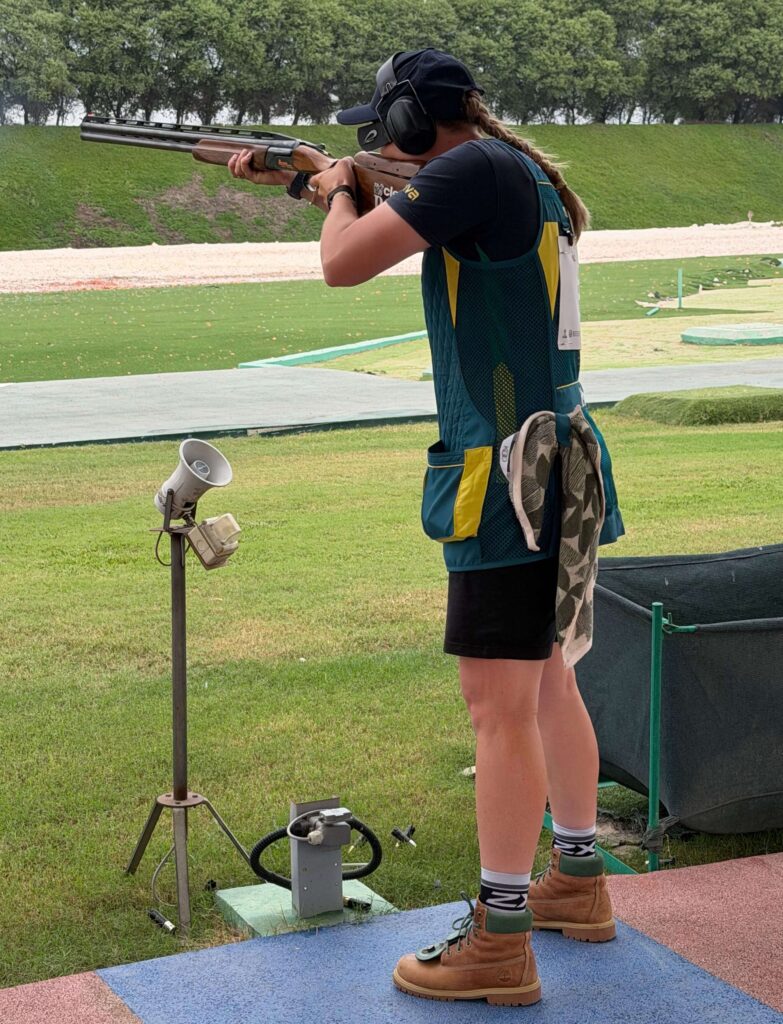
Reflecting on her 2026 World Championships experience, Penny Smith said “In all I’m disappointed with the results at the World Championships this year. Unfortunately, sometimes the best laid plans don’t happen, but you learn from it and you keep moving forward.”
“I have an amazing support network around me who I work closely with, and I thank them for all that they have done for me. We have a big 18-months ahead of us, so for now I’ll take some time to reflect, rebuild and refocus on what’s important. I still have the World Cup Final to shoot in a couple weeks, so that is my present focus.”
In the Men’s Trap, James Willett topped the tables amongst the Australian athletes, finishing 43rd overall with a qualification score of 116 out of 125 targets. Thomas Grice followed closely behind in 47th with a score of 115, whilst Gabe Sensi rounded out the Australian results, with a score of 111 to place 80th.
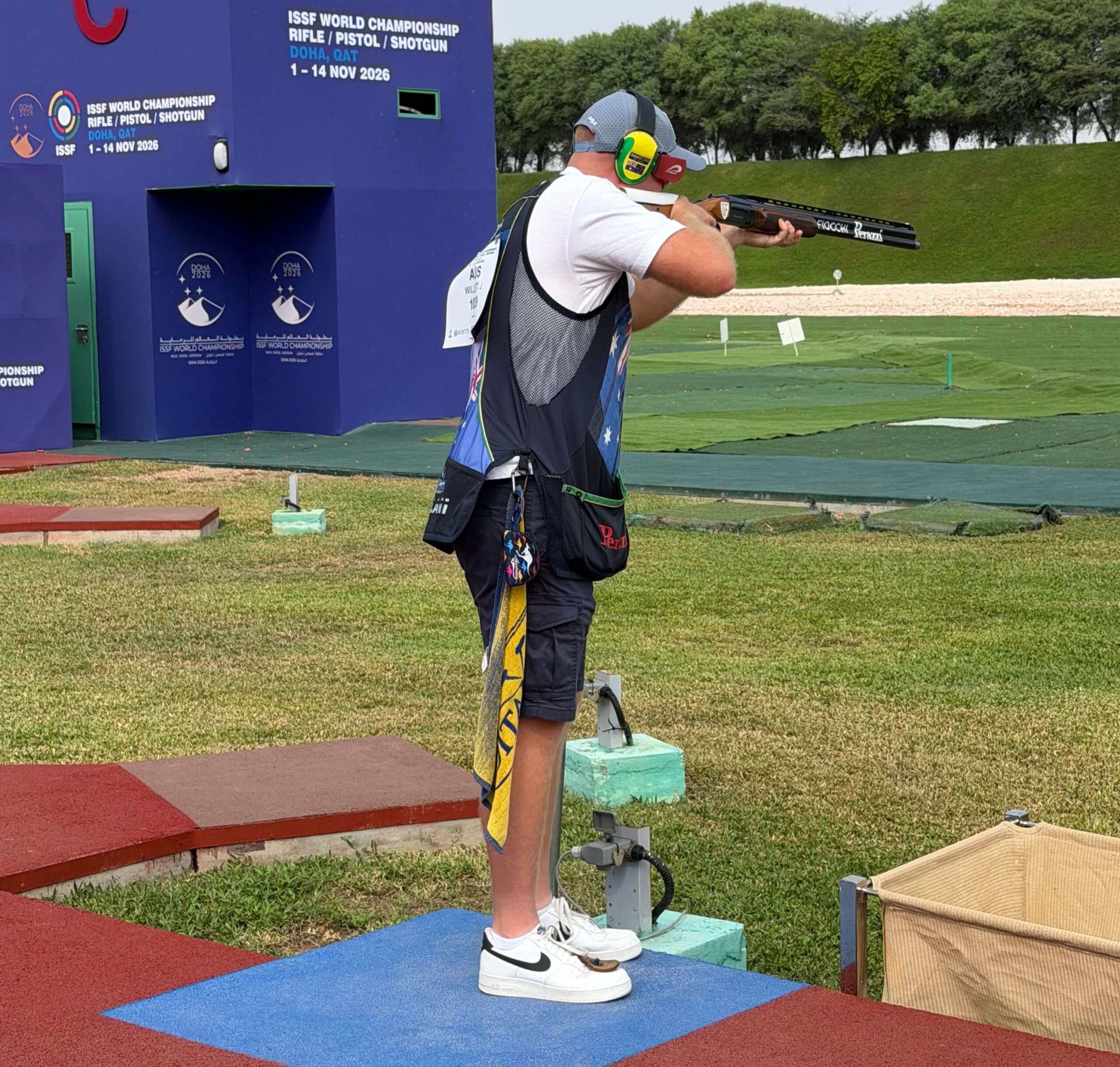
Speaking after the competition, Willett explained, “Obviously I’m disappointed not to have made the individual final as that is always the goal coming into a major competition. I put everything I could into my performance, and I know I gave it my best effort, but there are still plenty of positives to take aways from this competition.”
“I felt that I prepared well and had great support from my coaches and the Shooting Australia performance team. At this level, every target counts, and being able to deliver under pressure is what makes the difference.”
After a streak of Trap Mixed Team success across the World Cups in Lonato and Hangzhou, our Australian Trap athletes again contested the Trap Mixed Team Competition in Doha. In a field of 48 Trap Teams, Thomas Grice and Catherine Skinner finished 19th with a score of 135 out of 150. Whilst Penny Smith and James Willett completed the qualification stage with a score of 144 out of 150, progressing through to the Trap Mixed Teams final as top qualifiers out of the four qualifying teams. The duo then shot a score of 10 out of 20 and were eliminated from the final in 4th place.
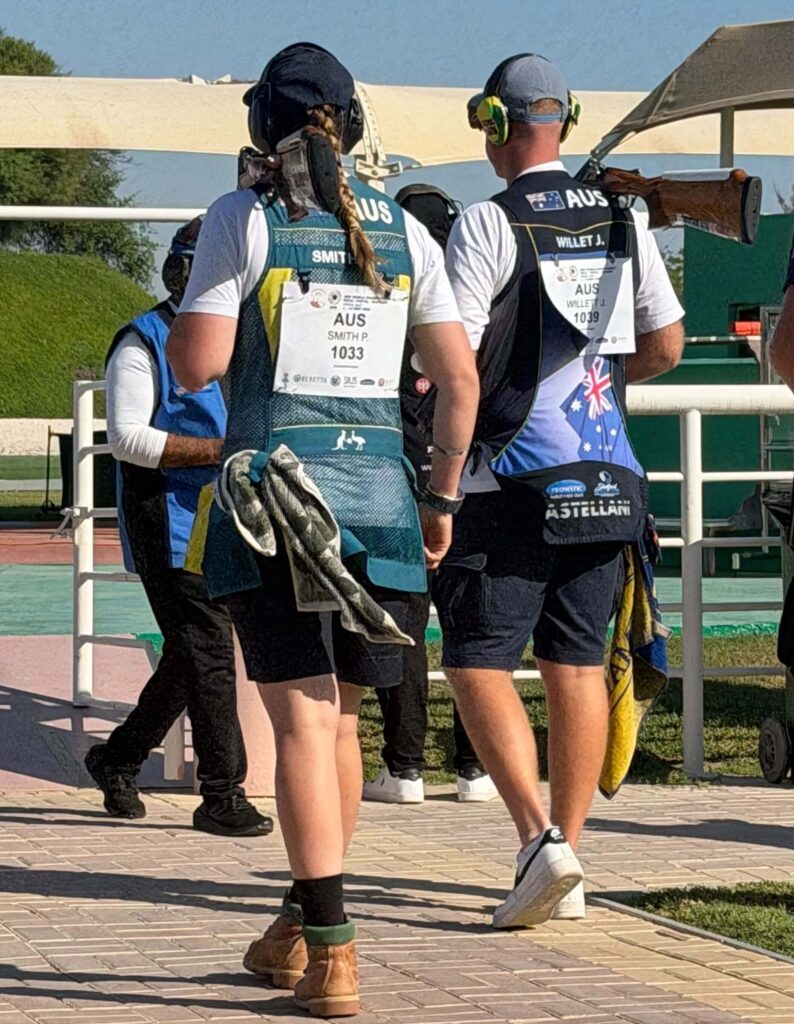
Smith recounted the Trap Mixed Team competition, emphasising that it was not the ideal outcome, “Obviously, James and I are disappointed about the result in the final, and we take responsibility for that. But sometimes a setback like this is a good springboard forward. We will take the positives out of this experience; we qualified Bib one at the World Championships and we will continue to work hard in the future for more opportunities.”
Willett echoed Smith’s sentiment, “I guess we had high expectations heading into the final, and while it didn’t go our way this time, I know we both gave it our best and we can still take positives from this experience. Penny and I have had some great results together throughout 2026 and we’ll look to build on those performances as we work towards LA 2028.”
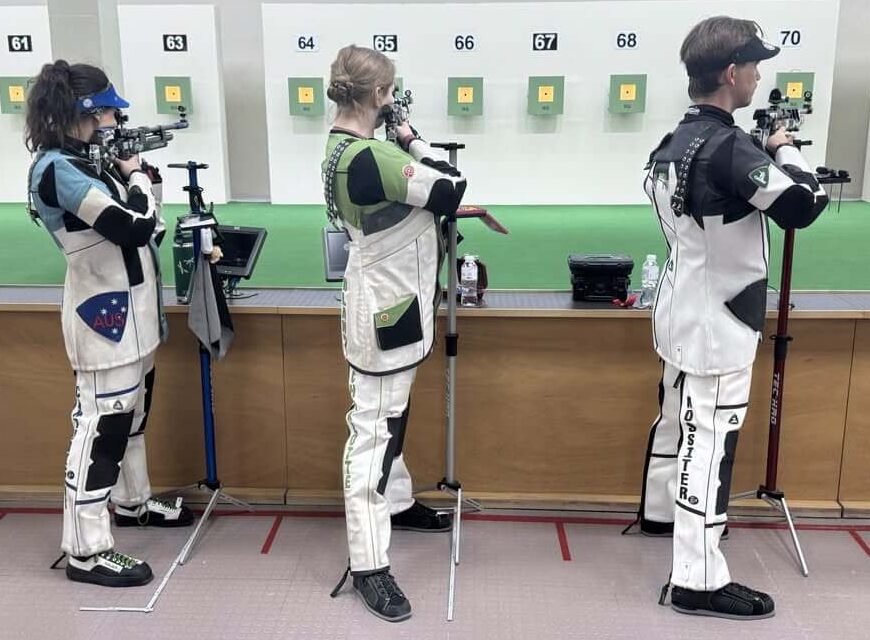
Charlotte Bland, Olivia Cartwright and Jack Rossiter also attended the 2026 World Championships, representing Australia in the Rifle events.
Charlotte Bland made her senior World Championships career debut in Doha, contesting the Women’s 10m Air Rifle competition alongside Olivia Cartwright, who was competing in her second senior World Championships event. Bland finished 104th overall with a score of 619.2, whilst Cartwright delivered a score of 616.1 to finish 112th.
In his fourth senior World Championships, Jack Rossiter delivered a series of strong performances, finishing 18th in the Men’s 50m Rifle 3 Positions event, with a score of 582, and 11th in the 10m Air Rifle event, where he shot a qualification score of 631.7, narrowly missing out on a final opportunity by just 0.5 points. Whilst not an Olympic event and not awarding any LA 2028 Olympic quotas, Jack Rossiter also contested the Men’s 50m Rifle Prone event where he shot a score of 615.5 to finish qualification in 54th place.
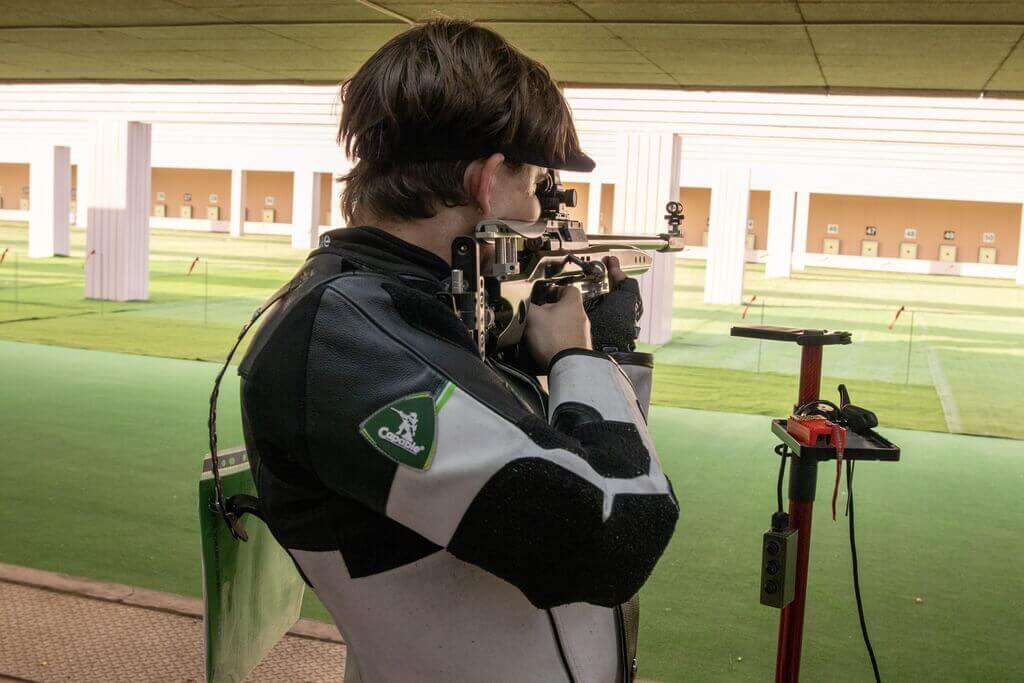
Reflecting on his World Championships campaign and his preparation over the last 12-months, Rossiter highlighted, “I had a successful World Championships Campaign. I was really happy with my preparation, and I feel that this competition was the peak of my season. The way we planned the competitions and training throughout the season worked well, so that I was fresh and ready for Doha.”
Looking ahead to the 2027 international season, Rossiter emphasised his desire to continue to improve, “my focus over the next 12-months is on consistent improvement. I want to be a little bit better every day and look to be ready for key competitions from now until 2028. The goal is to secure a quota spot for Australia, but if I just focus on improving, then I’m confident that will come eventually.”
Speaking to the efforts of the Australian Team at the 2026 World Championships, Shooting Australia’s CEO, Adam Sachs, said “The level of competition at this year’s World Championships was extremely high. Our athletes represented Australia very well, and whilst they may not have achieved the high-level results they had hoped, there were certainly positives that can be taken from each of their performances, combined with world-class results throughout the year, that will help them prepare for Olympic quota events in 2027 and the LA2028 Olympic Games.”
The Australian Team was supported at the 2026 ISSF World Championships in Doha by Shooting Australia’s Precision Senior Performance Coach, Petr Kurka, Shotgun Performance Coach, Renae Birgan, Shotgun Coaches, Tom Turner and George Barton, Shotgun Program Manager, Adam Hosking and Team Physio, Josh Ferguson.
Australia was also represented at the 2026 ISSF World Championships amongst the ISSF Event Officials, with Gleniss Lawrence travelling to Doha as an appointed RTS Jury member.
There is one more competition to come in the 2026 ISSF international season, as Penny Smith has been invited to compete at ISSF World Cup Final, which will be held from 3 – 11 November in Rome, Italy.
After a short period of rest over the holiday break, athletes will then look to prepare for a return to the domestic and international competition circuit in January 2027.

