



The Australian Trap Team enjoyed a strong campaign at the ISSF World Cup Almaty, recording three finals appearances across the competition, highlighted by a standout performance from Penny Smith, who claimed gold and set a new World Record.
Concluding over the weekend, the second Shotgun World Cup of 2026 (2 to 11 May, 2026) was held at the Asanov Shooting Club in Almaty, Kazakhstan, and attracted 284 athletes from 42 countries and National Federations across 346 competition starts. Represented by an 8-member team, Australia contested the Men’s Trap, Women’s Trap and Trap Mixed Team events. In the Women’s Trap event, Penny Smith and Laetisha Scanlan delivered strong qualification performances, shooting scores of 120 and 119 respectively (out of 125) to secure their places in the eight-athlete final. Queenslander, Stephanie Pile, shot 107 and finished the competition ranked 39th.

In a whirlwind 48 hours of competition, Smith produced a world class performance that she described as “a very special moment”, culminating in winning gold and breaking the World Record by not missing a target in a 30 out of 30 faultless final.
Competing in the newly introduced final format, Smith said the experience of adapting to the faster, high-pressure “sprint” style of shooting added an extra layer of challenge to her victory.
“It has been a great 48 hours,” Smith said. “Shooting the new final format for the first time was a great experience. I knew I just had to stay in my lane and focus on each target. To come away with a World Cup win and a new World Record really topped it off.”
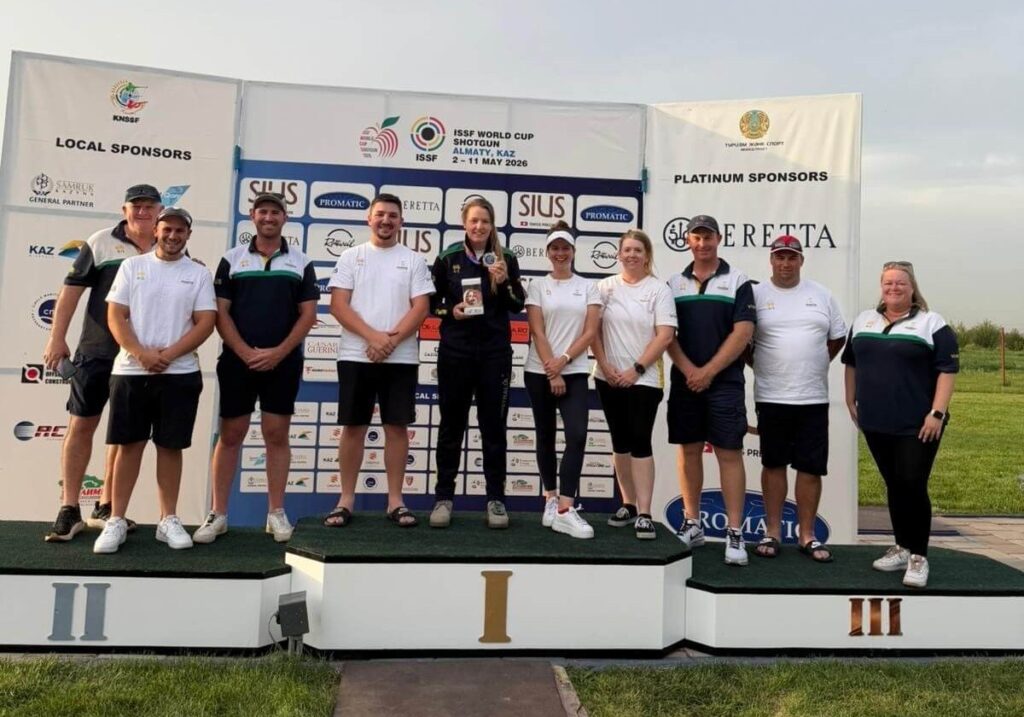
Despite the magnitude of her achievement, Smith was quick to acknowledge that her Olympic bronze medal (Paris 2024) remains the benchmark of her career so far, though she placed this latest result firmly amongst her most significant international performances.
“I don’t think anything could really top my Olympic medal, but this is certainly right up there,” she said. “Every international medal is significant in its own way.”
Following along from home, Smith’s mum, Kim, expressed how proud she is of her daughter’s performance. “We are very proud of Penny knowing the hard work and dedication she puts into everything she does.” In comparing World Cup and Olympic successes, she said, “There is no event in the world that compares to the Olympic Games but to win another World Cup and set a world record 30/30 was truly amazing.”
In a composed and controlled final against some of the world’s best, Smith appeared unfazed, even as she edged closer to both gold and the record amidst loud cheers from the crowd. She credited her ability to stay focused in part to the nature of the competition itself.
“To be honest, I can’t really hear much when I’m out shooting, which I think helps,” she explained. “Once I knew I’d won, I just wanted to hold it together and see if I could run [hit] the remaining targets. I wasn’t focussed on the World Record – just staying in the moment.”
The new finals format, which features fewer targets and an eight-athlete field, has already drawn attention from competitors for its intensity and unforgiving pace.
“It’s certainly a sprint – you can’t afford a slow start,” Smith said. “Bib number [start number] plays a bigger role now, and it will be good to shoot it a few more times to really understand it.”

Scanlan, the second Australian in the Women’s Trap final, despite falling just short of a medal finishing in fourth place, remained focused on her positives from her performance.
“Fourth is always a tough place to finish. It’s so close to the podium, yet so far,” Scanlan said. “I always like to take the positives out of the competition, so it’s great that I had a strong qualification and gained more finals experience.”
She emphasised the importance of competing regularly at the elite level, noting that finals provide critical learning opportunities against the world’s best athletes.
“It’s incredibly valuable,” she said. “Finals at this level are where you really test yourself against the top athletes in the world. Every competition is an opportunity to learn, adapt, and build for the future.”
In a final that included women from the age of 20 to the age of 40, Scanlan reflected on the evolving strength and depth of women’s trap globally, saying the increasing competitiveness of the field is driving standards higher across the board.
“Age is not a barrier. The range of talent and depth is exciting, and it just goes to show how strong Women’s Trap has become globally,” she said. “You can’t underestimate anyone in this sport.”
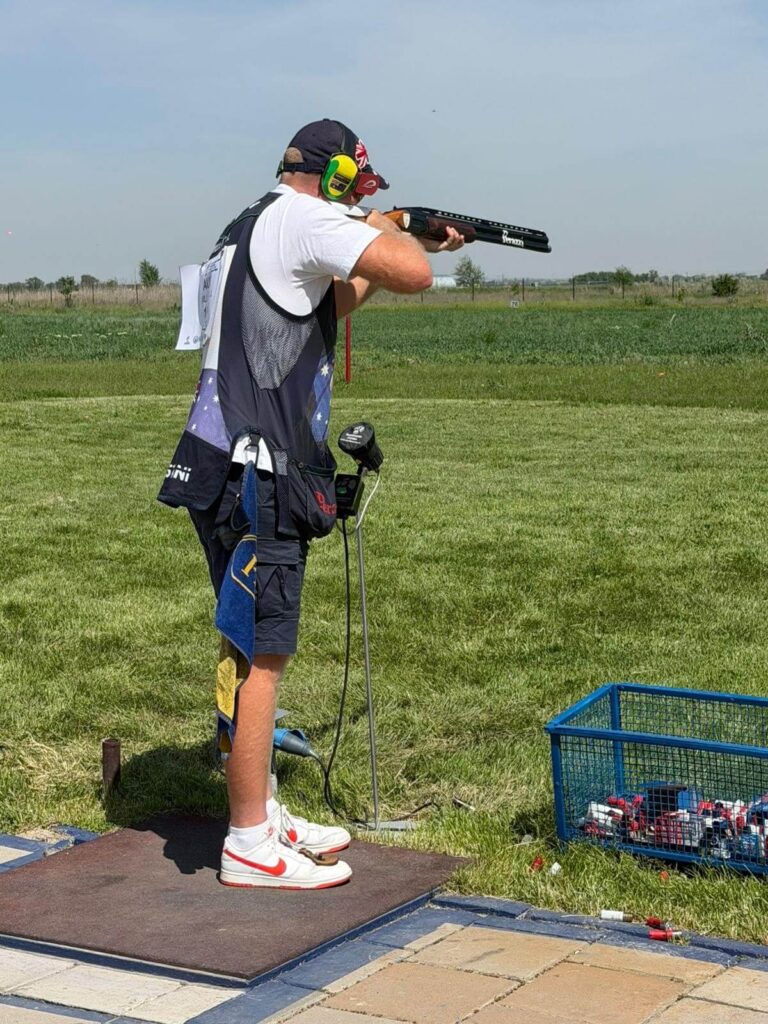
In the Men’s Trap event, James Willett produced an impressive near perfect qualification score hitting 124 out of 125 targets, a result he describes as reflective of the precision and consistency now required at elite level.
“At the World Cup level now, the standard is incredibly high, and you really can’t afford to give many targets away,” Willett said. “I am very proud to have hit 124/125 here. To consistently make finals, you need both strong technical execution and the ability to handle pressure across all five rounds. It’s no longer just about shooting ‘good’ scores – you need to be operating at a world-class level every time you step on the range.”
Securing his place in the Men’s Trap final, Willett reflected on the mental challenge transitioning from qualification to finals, describing them as almost two separate competitions.
“Qualifications and finals are almost two separate competitions mentally,” he said. “You put a huge amount of focus and energy into qualifying over two or three days, which feels like a marathon, but once you’re in the final, everyone starts again from zero and it’s almost a sprint to win the medals.”
In the 2023 Almaty World Cup, Willett shot a qualification score of 123 and won the silver medal, and in the recent final on the weekend, placed fifth. While acknowledging the disappointment that comes with falling short of further progression in finals, Willett said “To come back to Almaty and shoot another strong qualification score against such a high-quality field is pleasing and shows I’m continuing to perform at the international level. As an athlete you always want more once you make a final, but there are still plenty of positives to take from the result.”
Talking about his journey between the two Almaty World Cups, Willett said, “The journey between 2023 and now has involved a lot of growth, experience and balancing life outside of sport as well. I still feel motivated to keep improving and pushing towards bigger goals over the next few years.”
Looking at the broader Australian team performance, Willett said the consistency of finalists at World Cups is a strong indicator of progress ahead of upcoming Olympic cycles.
“It’s extremely important,” he said. “International trap shooting is as competitive as it has ever been, so for Australia to consistently have athletes competing well and making finals at World Cups is a really positive sign for the strength of Australian shooters. The depth across the team is very positive as we move forward, especially as we build towards LA Olympics in 2028 and Brisbane in 2032.”
Two other Australians finished the Men’s Trap qualification in the top 20, with Mitch Iles narrowly missing a place in the 8-man final shooting 120 out of 125, finishing in 9th, and Thomas Grice shot 118 placing 19th. Gabe Sensi finished in 27th after shooting 117 targets, and Jamie Dunn finished in 66th with a score of 111.

The final competition at the Almaty World Cup on Sunday was the Trap Mixed Teams event. Smith returned to the range with team partner Iles shooting a combined score of 135 out of 150 and placing 15th, while Scanlan and Grice shot 136, finishing 13th.
The Australian Team will now return to Australia and begin preparations for domestic competition, as attention turns to selections for the 2026 Senior World Championship team, and the commencement of the LA Olympic qualification process. All media enquiries, please do not hesitate to contact Shooting Australia Event, Communication and Sport Development Manager, Jane Vella, via jane@shootingaustralia.org or 0407 859 197.

